
High Pressure Reactor · Procurement Guide
Choosing a Supplier for a Chemical Synthesis Autoclave Reactor
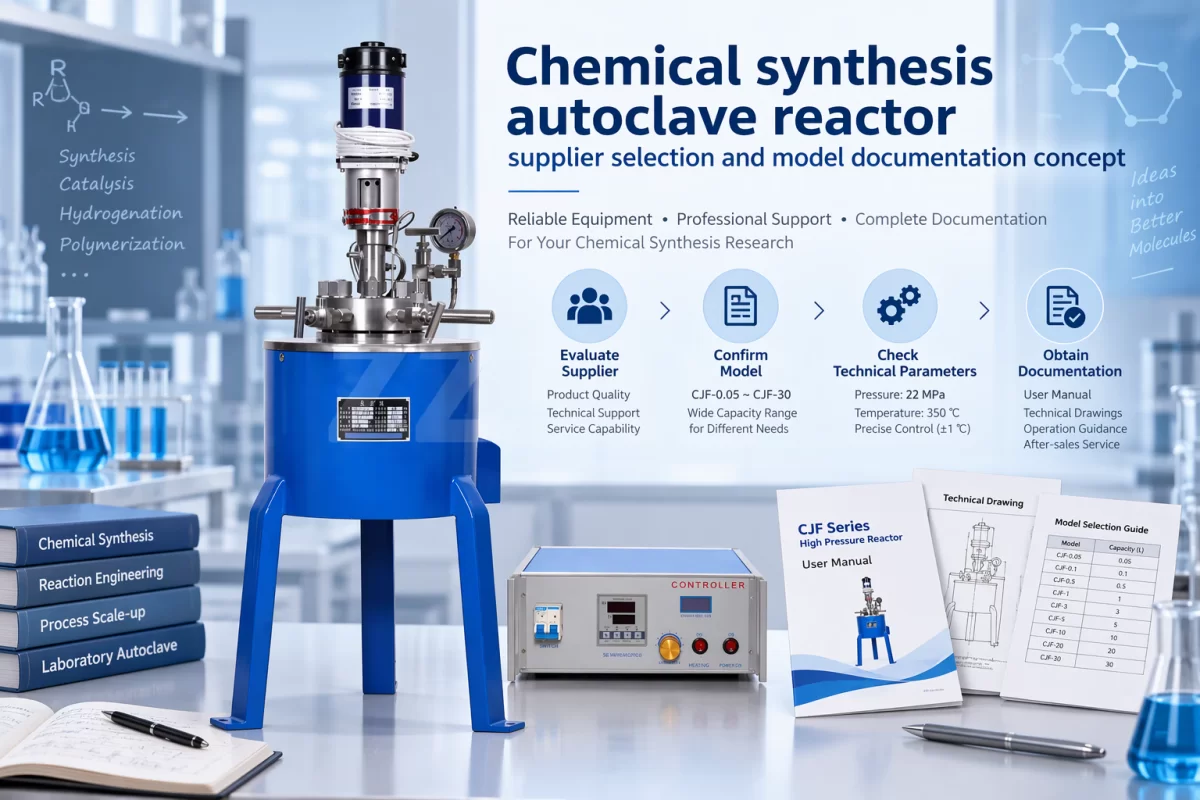
Selecting a high pressure autoclave reactor for chemical synthesis supplier involves more than comparing vessel size and a headline pressure figure. A useful supplier evaluation connects the intended synthesis process to an identifiable reactor model, a documented configuration, and a practical plan for operation and maintenance. Model files, spare parts, and delivery support deserve attention before a purchase order is placed.
Begin with model documents, not product names alone
The High Pressure Autoclave Reactor is a relevant starting point for a synthesis equipment inquiry. The purchasing decision, however, should identify the exact proposed model and configuration rather than rely on the product category. Request a model-specific specification sheet, a general arrangement drawing, and an itemized configuration schedule that can be referenced in the quotation.
Those documents should connect vessel capacity, wetted materials, pressure–temperature limits, stirring equipment, sealing components, measurement devices, and process connections. Ask which inspection records, operating instructions, and pressure-equipment documents are included for the intended installation location. A requested document or certification is not an included deliverable until the supplier explicitly confirms it.
Compare capacity and operating specifications by exact model
The FCF model specifications below show why capacity, pressure, temperature, and stirring speed must stay together during selection. Increasing vessel capacity does not preserve every specification of a smaller reactor. Heating power is also a model-specific figure; it does not, by itself, establish a guaranteed heat-up time for a particular reaction mixture.
| Model | Capacity (L) | Pressure (MPa) | Temperature (°C) | Stirring speed (r/min) | Heating power (kW) |
|---|---|---|---|---|---|
| FCF-1 | 1 | 22 | 350 | 50–1000 | 1.5 |
| FCF-5 | 5 | 22 | 350 | 50–600 | 4 |
| FCF-20 | 20 | 22 | 350 | 50–600 | 10 |
| FCF-30 | 30 | 16 | 350 | 50–600 | 12 |
| FCF-50 | 50 | 10 | 300 | 50–600 | 12 |
| FCF-100 | 100 | 6 | 300 | 50–600 | 14 |
Listed capacity is not a recommended working charge. Pressure and temperature entries are specification values, not a process-specific guarantee of simultaneous operation.
For example, FCF-100 should not be evaluated as a 100 L vessel with the 22 MPa pressure specification of FCF-20. Its listed pressure is 6 MPa and its listed temperature is 300 °C. For a proposed synthesis, obtain the allowable pressure at the intended temperature for the offered vessel, together with the applicable seal, valve, and accessory limitations.
Separate current batch size from changes and future expansion
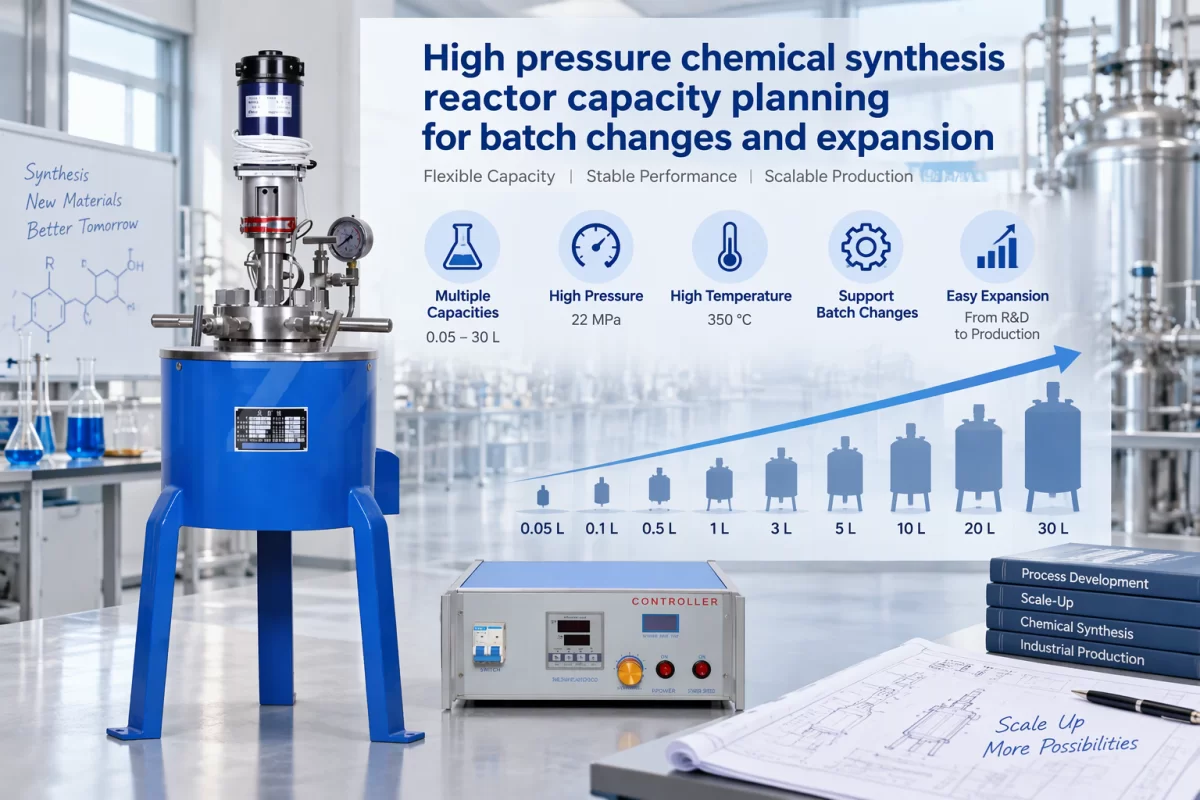
A capacity inquiry is more useful when it distinguishes four different needs. Combining them into one oversized volume request can obscure the operating conditions that matter most. Further reading on selecting a stainless steel reactor vessel size can support this discussion, while the final vessel choice remains specific to the process.
Current working batch
State the starting charge, material composition, expected liquid volume at operating temperature, and any solids or gas phase. Nominal vessel capacity should not be treated as usable batch volume, and one universal filling percentage should not be applied to every material.
Changes during addition
Describe staged solvent addition, reagent feeds, catalyst introduction, and sampling. The highest liquid level may occur after the initial charge. Feed arrangements also need suitable connections, isolation, and pressure compatibility.
Process allowance
Identify foaming, thermal expansion, gas generation, and other behavior affecting headspace and operating limits. Define pressure and temperature requirements from the process assessment separately from the supplier’s confirmed equipment capabilities.
Future expansion
Describe the anticipated future batch separately from today’s production target. A larger vessel requires a new review of pressure–temperature suitability, mixing, heat transfer, handling, and utilities; it is not simply a proportional replacement.
Keep the quoted and delivered configurations consistent
When discussing the High Pressure Chemical Reactor, use a written configuration schedule to connect the proposed equipment to the synthesis requirements. A product name does not establish its construction material, sealing method, instrument arrangement, or available interfaces.
The TGYF-C specification identifies mechanical stirring, modular electrical heating, and stainless steel 304 and 316 as material options. That information provides a starting point for an inquiry, but the quotation should identify the actual selected material and the wetted components included. Material compatibility must be assessed for the specific chemicals, concentrations, operating temperatures, and cleaning procedures.
- Vessel and internals: Record the selected model, nominal capacity, wetted materials, impeller arrangement, and access for cleaning.
- Sealing and connections: Identify seal materials, connection types, feed and sampling ports, and the proposed pressure-relief arrangement.
- Measurement and controls: Define temperature-sensor location, pressure measurement, controller functions, alarms, and any required recording or interlocks.
- Utilities and installation: Specify the electrical supply, cooling or heating services, installation space, and handling requirements for the offered configuration.
Keep the same configuration identifiers in the quotation, order confirmation, inspection records, and packing list. Any agreed substitution should be documented before dispatch, including its effect on operation, maintenance, and acceptance.
Evaluate spare parts, delivery support, and purchasing scope
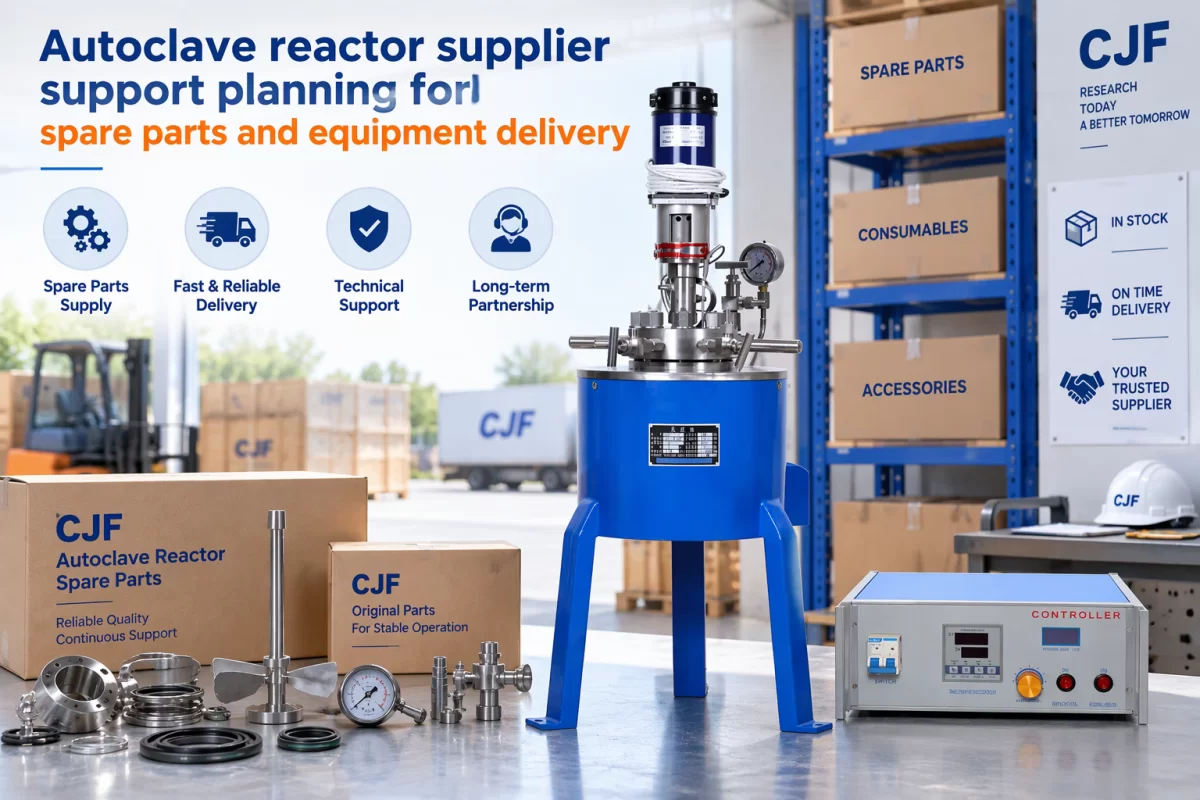
Supplier support should be evaluated as a defined deliverable rather than a general promise. Ask for a recommended initial spare-parts list with part numbers and compatibility information. Seals, gaskets, valves, sensors, and stirring components should be identifiable for the exact purchased configuration, with replacement lead times stated in the offer.
Delivery planning should cover the agreed manufacturing schedule, packing method, shipping responsibilities, unloading arrangements, and documentation supplied with the reactor. Establish whether installation guidance, commissioning assistance, and operator training are included, optional, remote, or on site. Do not assume those services are part of the base equipment price.
Company reference price
Our company’s reference price is US$2,971. This is a budgeting reference, not a quotation for a specific FCF, CJF, or TGYF-C configuration. The actual quotation depends on the selected configuration and the results of the inquiry.
Choose a synthesis reactor supplier through documented fit
A sound high pressure autoclave reactor supplier decision rests on a model-specific operating assessment, a consistent equipment configuration, and clearly defined spare-parts and delivery support. Keep capacity, pressure, temperature, and stirring specifications tied to the same model, and evaluate current batch needs separately from feed changes, process allowance, and future expansion.
Submit the material composition, working batch, addition sequence, target pressure and temperature, mixing requirements, preferred wetted materials, required connections, utilities, and delivery location with the inquiry. These details provide the basis for reviewing a corresponding configuration and preparing a suitable quotation.