
Comparing Stainless Steel Reactor Vessels for Chemical Manufacturing
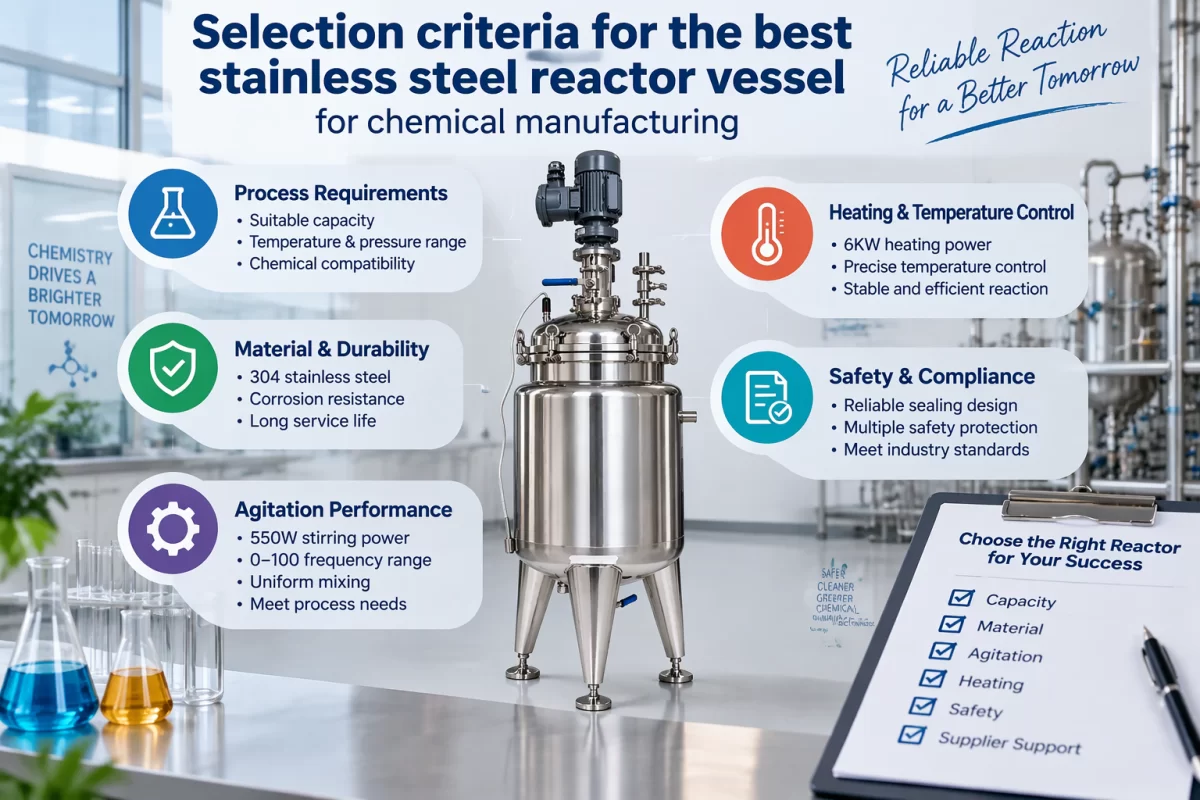
Finding the best stainless steel reactor vessel for chemical manufacturing starts with a defined process, not a universal equipment ranking. Material compatibility, agitation, heat removal, sealing and cleaning access all influence whether a particular configuration fits a production task. A useful comparison separates documented equipment features from process suitability and the project records needed before operation.
The SS-5L configuration provides a concrete reference for this discussion. Its documented features can support an initial comparison, but they should not be treated as specifications for every stainless steel reactor or transferred automatically to a larger manufacturing system.
Compare reactor configurations on the same basis
Start a vessel-focused enquiry with the Stainless Steel Reactor Vessel. Compare the proposed configuration by vessel volume, wetted materials, agitator design, heating arrangement, seal construction and connection details. The product name alone does not establish the operating envelope or included accessories.
Vessel volume and working batch volume are different purchasing considerations. Allowances for foaming, gas space, material additions and agitation must come from the process assessment. For a closer look at batch sizing, the guide to choosing a stainless steel reactor vessel size is a relevant next step.
| Comparison item | Documented SS-5L detail | Process assessment |
|---|---|---|
| Vessel volume | 5 L | Establish the working fill level and required free space for the intended batch. |
| Reactor material | 316 stainless steel | Assess compatibility with reactants, solvents, impurities and cleaning chemicals. |
| Other listed materials | 304 stainless steel frame, piping and three-blade stirring rod | Distinguish structural components from components exposed to process fluids. |
| Agitation control | 0–600 rpm; frequency-converter control; digital speed display | Evaluate mixing at the proposed viscosity, fill level and solids loading. |
| Heating and sensing | Circulation heating; PT100 sensor with digital temperature display | Assess utility sizing, sensor position and the required temperature response. |
| Sealing and connections | Mechanical seal; threaded-union interfaces | Review chemical compatibility, maintenance access and connection requirements. |
| Discharge | Quick-discharge ball valve | Evaluate drainage and cleaning with the intended product characteristics. |
| Electrical supply | 220 V / 60 Hz | Match the quoted equipment to the installation's electrical supply. |
Materials: evaluate the complete wetted path
Comparing 304 and 316 stainless steel is useful only when the chemical exposure is defined. Concentration, temperature, contaminants and cleaning conditions can change the suitability of either material. A vessel material designation does not describe every component that may contact the batch.
In the documented SS-5L configuration, the reactor is 316 stainless steel while the stirring rod and piping are listed as 304 stainless steel. That distinction matters when evaluating the complete fluid-contact path. The frame material serves a different purpose and should not be used as evidence of process-contact compatibility.
Does a 316 stainless steel vessel automatically suit every chemical batch?
I would not select it on the grade designation alone. I would assess the actual chemical mixture and exposure conditions, then include the agitator, piping, valve and seal materials in the compatibility review. A suitable vessel wall cannot compensate for an unsuitable component elsewhere in the wetted path.
For a manufacturing-focused enquiry, the Stainless Steel Chemical Reactor provides the corresponding product route. The comparison should still use the offered configuration and its supporting specification, rather than assume that the page title establishes material grade, heating capacity or certification.
Agitation and heat transfer must be assessed together
The SS-5L lists a three-blade stirring rod and variable-speed operation from 0 to 600 rpm. These are identifiable equipment features, not proof of uniform mixing for every formulation. Low-viscosity liquids, suspended solids and thickening reaction mixtures can place different demands on impeller geometry and drive torque.
Compare agitation at the same working volume and material condition. Useful process evidence includes mixing time, solids suspension behavior and temperature distribution during the intended operating sequence. Matching rotational speed alone is not a reliable scale-up rule.
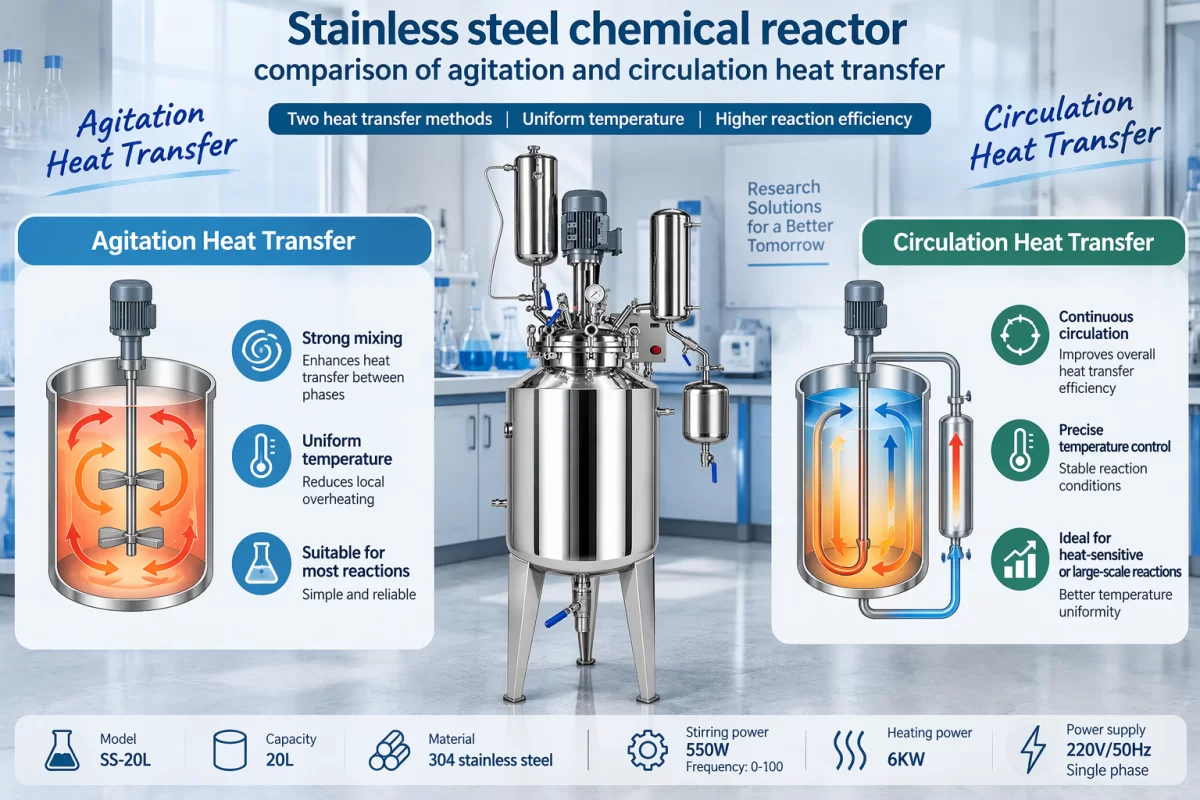
Circulation heating is documented for the SS-5L, together with PT100 temperature sensing and a digital display. Actual heating and cooling response depends on the circulating utility, available heat-transfer area, batch properties and mixing. A sensor display does not by itself establish temperature uniformity throughout the vessel.
Is a higher stirring speed always a better manufacturing choice?
I compare speed with the mixing objective. Excessive agitation can be undesirable for shear-sensitive products or processes prone to gas entrainment. The useful comparison is whether the selected impeller and drive meet the required mixing duty while supporting the intended thermal control.
Pressure and temperature requirements should be assessed together for the exact proposed assembly, including its seal, valve, connections and accessories. Separate maximum values from different configurations should never be combined into a single assumed operating capability.
Maintenance, cleaning and pharmaceutical-use boundaries
The SS-5L documentation identifies a mechanical seal, threaded-union connections and a quick-discharge ball valve. Its lid openings include stirring, solids charging, temperature measurement, pressure measurement, a constant-pressure funnel and condensation reflux; the opening arrangement can be customized.
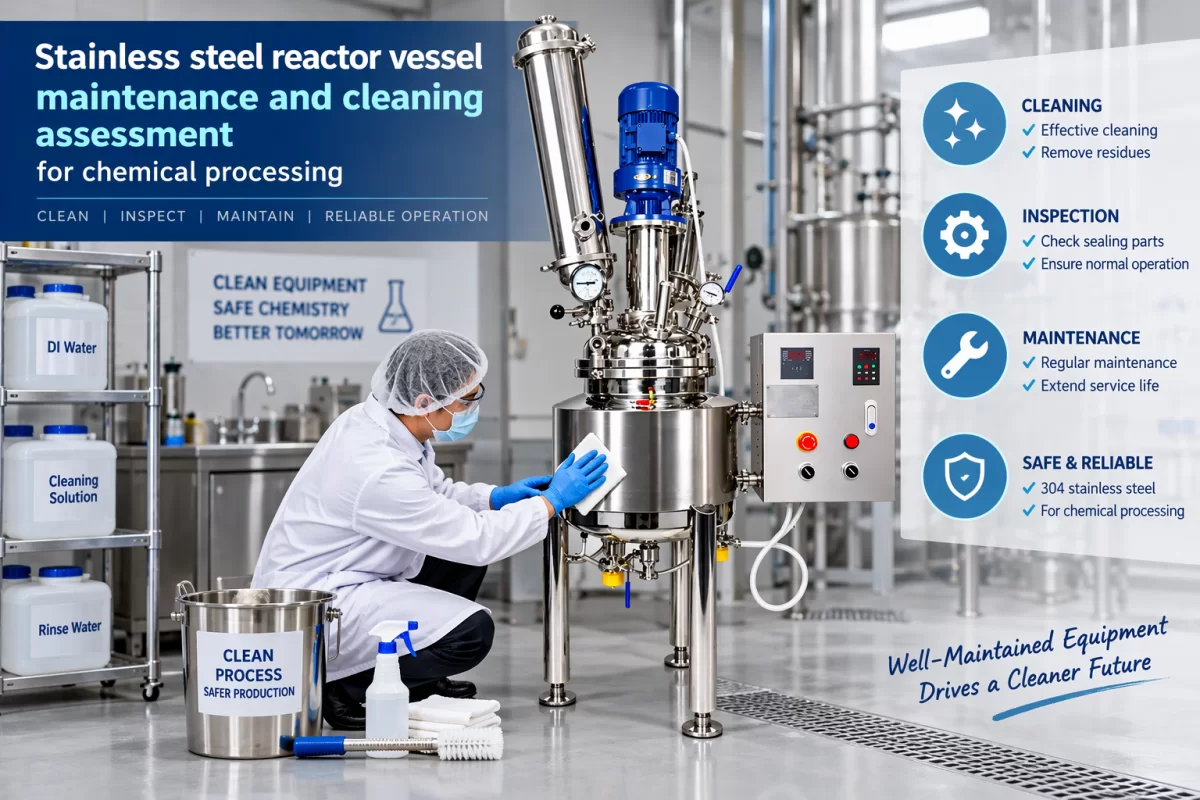
These features help frame a maintenance discussion, but their presence does not establish residue-free drainage or a validated cleaning procedure. Compare seal replacement access, disassembly needs, valve cavities, connection cleaning and the handling of deposits after the actual process.
Can a general-purpose stainless steel reactor be selected for pharmaceutical processing?
I would make that decision conditional on the specific material, contamination risks, cleaning requirements and project documentation. General application suitability is not a whole-machine certification or a guarantee of compliant pharmaceutical production.
Keep three evidence categories separate: equipment specifications describe the supplied construction; process assessments address chemical, mixing and thermal suitability; and project verification records demonstrate agreed acceptance criteria. Depending on the application, procurement requirements may include material traceability, surface-finish records, calibration records and cleaning or qualification documentation. These should form part of the agreed project scope rather than be assumed from the stainless steel designation.
Reference pricing and a comparable procurement scope
Our company's reference price:US$2,042. This is a purchasing reference from the supplied company price listings, not a quotation for every reactor discussed here. The actual quotation depends on configuration and the enquiry result.
Compare quotations with the same equipment boundary: vessel and agitator, thermal utilities, condenser, instrumentation, connections, seals and documentation. Differences in included scope can matter more than a headline price. A lower initial figure does not establish lower maintenance cost, and a higher figure does not prove better process suitability.
Selecting the best-fit stainless steel reactor vessel
The best stainless steel reactor vessel for chemical manufacturing is the configuration that meets a defined duty with supporting evidence. Compare the complete wetted materials, agitation performance, heat-transfer requirements and maintenance access on the same basis. Judge reliability through relevant design details, acceptance testing and maintenance provisions, not through an absolute ranking claim.
Submit the chemical composition, working batch volume, viscosity or solids loading, target temperature and pressure, available utilities, cleaning needs and requested accessories. These requirements provide a practical basis for reviewing the corresponding reactor configuration, agreeing the documentation scope and obtaining a project-specific quotation.