
High pressure autoclave reactor supplier for pilot plants
Pilot plants sit between laboratory research and real production. That middle stage is where process data becomes valuable, risk becomes expensive, and equipment quality matters more than ever. A dependable high pressure autoclave reactor supplier helps bridge that gap by providing safe, stable, and scalable equipment for testing reactions under elevated pressure and temperature.
Why pilot plants need high pressure autoclave reactors
In pilot-scale chemistry, small errors can create big delays. A process may work in a beaker, but once pressure, heat transfer, mixing, and material compatibility are introduced, the real behavior of the reaction becomes much clearer. That is where a high pressure autoclave reactor becomes essential. It allows engineers and researchers to simulate production-like conditions in a controlled environment.
Industries such as pharmaceuticals, petrochemicals, new materials, fine chemicals, and catalyst development often rely on pilot reactors to verify reaction yield, evaluate safety windows, and improve process repeatability. According to the U.S. Department of Energy, pilot-scale testing plays a critical role in reducing scale-up risk before commercialization, especially in advanced chemical and energy processes. This is one reason pilot plants invest in robust pressure equipment instead of relying on standard atmospheric vessels.
What do buyers usually want to know first?
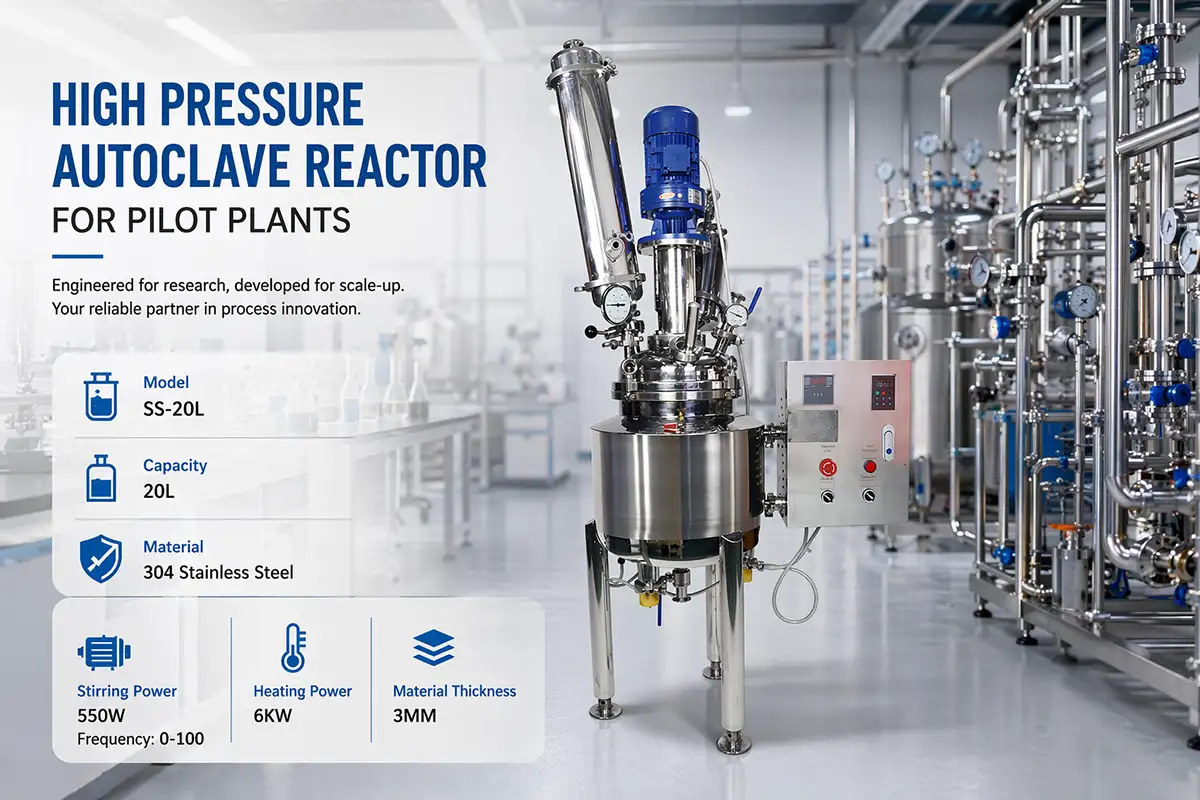
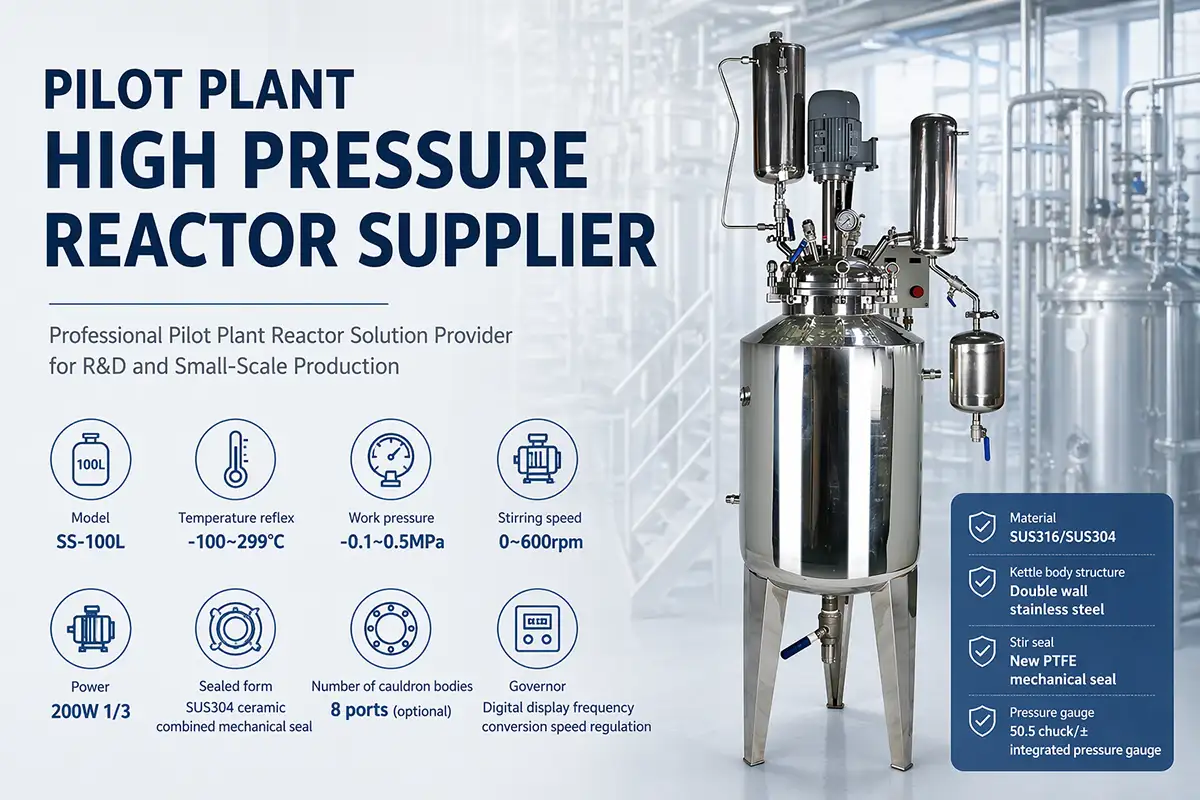
The first concern is usually simple: what can the reactor actually handle? For pilot work, buyers typically want clear answers on maximum pressure, temperature, volume, stirring performance, heating type, and material grade. They also want to know whether the equipment can be customized for sampling, feeding, condensation, data monitoring, or special corrosion resistance.
For example, the ZZKD TGYF-C high pressure autoclave reactor series is available in 0.05L, 0.1L, 0.25L, 0.5L, and 1L volumes. It is rated for 22 MPa pressure, up to 350℃, with mechanical stirring up to 1000 r/min. Heating is modular electric heating, and material options include stainless steel 304 and 316. For pilot screening and process optimization, those figures offer a practical balance between compact size and serious operating capability.
Is higher pressure rating always better for a pilot plant reactor?
Not always. From the author’s perspective, the better choice is the pressure rating that safely covers the actual process plus a reasonable design margin. Overspecifying can increase cost and complexity, while underspecifying creates operational risk. The right supplier helps match the reactor to the real process window.
| Model | Volume Options | Max Pressure | Max Temperature | Stirring Speed | Heating Power | Heating Mode | Material |
|---|---|---|---|---|---|---|---|
| TGYF-C | 0.05L / 0.1L / 0.25L / 0.5L / 1L | 22 MPa | 350℃ | 1000 r/min | 0.7kW to 1.5kW | Modular electrical heating | SS304 / SS316 |
How to evaluate a high pressure autoclave reactor supplier
When selecting a supplier for pilot plants, the vessel specification is only one part of the decision. The bigger question is whether the supplier can support process development over time. From the author’s viewpoint, the best suppliers usually perform well in five areas:
Engineering clarity: datasheets should be complete and easy to verify.
Material transparency: SS304 and SS316 options should be clearly defined based on process needs.
Control and safety design: stable heating, accurate sensing, pressure display, and proper sealing are essential.
Scalability: the supplier should understand the move from lab scale to pilot and from pilot to production.
Service response: customization, spare parts, and technical communication should not be difficult.
That last point matters more than many buyers expect. According to the American Institute of Chemical Engineers, process safety depends heavily on correct equipment selection, operating limits, and hazard understanding. In practical terms, that means buyers should not compare reactors only by headline price. They should compare safety design, sealing reliability, material suitability, and usability in real pilot conditions.
ZZKD is positioned well in this area because it offers both high pressure autoclave reactors and related stainless steel and glass reactor equipment. For users comparing technologies, it can also be useful to review articles such as stainless steel chemical reactor complete technical guide and high pressure autoclave reactor to understand where pressure reactors fit in a broader process setup.
What about price?
Price is one of the most searched topics, and rightly so. Buyers often want a realistic budget range before requesting a formal quotation. Based on the provided market price references, compact high pressure reactors can start below $1,000 for very basic units, while many common laboratory and pilot-oriented stainless steel high pressure autoclaves fall around $2,300 to $3,200. When a product shows a range, a middle but relatively lower choice is a practical reference. For example, a listed range of $2,300–$3,200 can be referenced around $2,600, and a range of $1,857–$3,342 can be referenced around $2,400.
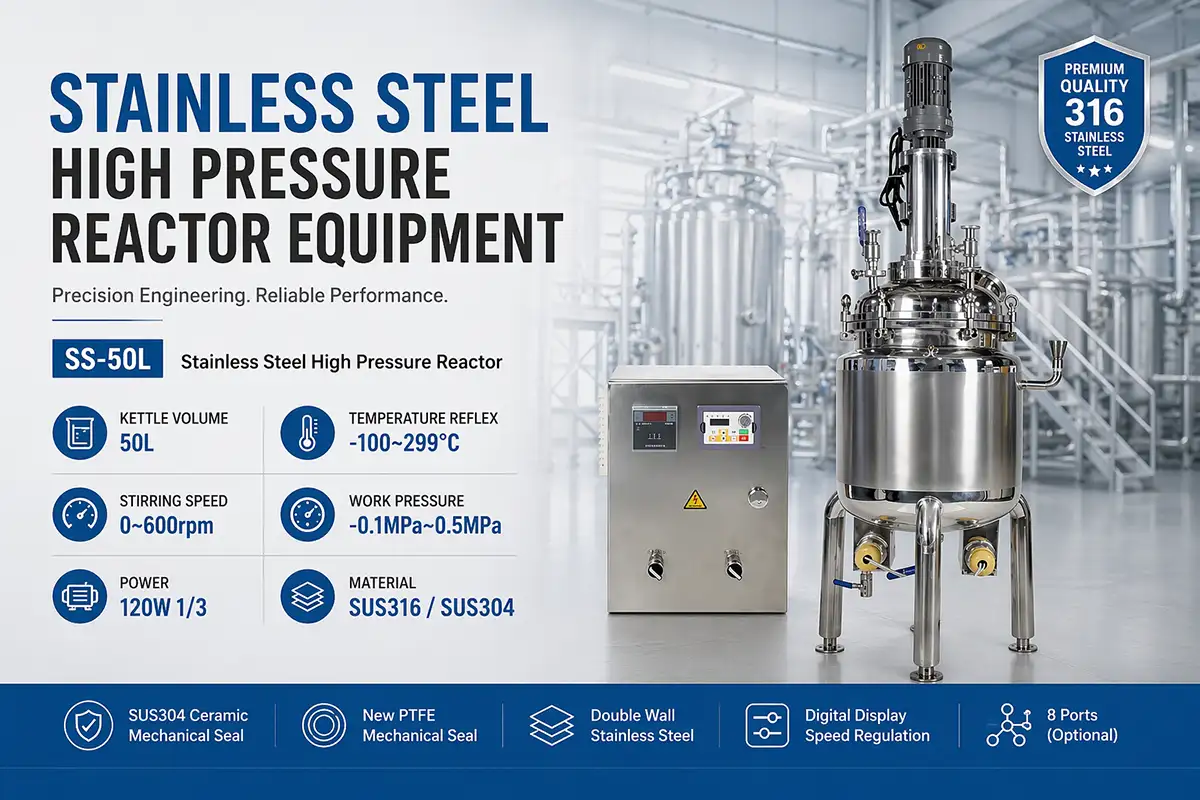
As reactor volume increases, price rises sharply. Around 10L, market references move to roughly $6,500 to $9,500. Around 20L, listed prices can reach about $7,000. For 50L high pressure stirred reactors, prices commonly move into the $8,000 to $15,600 range depending on design, material, control system, and configuration.
Why do reactors with similar volume sometimes have very different prices?
In the author’s experience, volume is only one cost factor. Material grade, pressure rating, sealing system, stirring structure, controller level, heating system, and customization can all change the final price significantly. Two 1L reactors may look similar in size but differ greatly in long-term reliability and safe operating range.
| Reference Product Type | Typical Volume | Observed Market Price | Useful Budget Reference |
|---|---|---|---|
| Entry compact reactor | 50ml–500ml | $770–$1,300 | About $1,100–$1,200 |
| Standard small lab autoclave | 0.1L–1L | $2,300–$3,200 | About $2,600 |
| Mid-range quoted unit | 1L class | $1,857–$3,342 | About $2,400 |
| 10L high pressure reactor | 10L | $6,500–$9,500 | About $7,000–$8,500 |
| 20L high pressure autoclave reactor | 20L | Around $7,000 | About $7,000 |
| 50L pilot-oriented reactor | 50L | $8,000–$15,600 | About $9,000–$10,000 for simpler versions |
For teams comparing pressure and non-pressure systems, it may also help to review glass reactor system price as a lower-pressure reference point. That comparison often makes it easier to justify why high pressure stainless steel systems cost more.
Why ZZKD is a practical choice for pilot plant buyers
ZZKD stands out because the product line supports a broad process path. Early research may begin with small high pressure screening units such as the TGYF-C series. Later stages may require larger stainless steel reactors, jacketed systems, or process-specific customization. That continuity is valuable because pilot plants do not operate in isolation. They are part of a scale-up journey.
Another advantage is usability. Clear heating structure, mechanical stirring, stainless steel material choices, and compact volume options make the TGYF-C style reactor understandable even for teams that are new to pilot equipment purchasing. Instead of forcing buyers through excessive technical complexity, the system presents the key information directly: pressure, temperature, speed, material, and power.
Final answer to the main buyer question
If the real question is which supplier is suitable for a pilot plant high pressure autoclave reactor, the answer should focus on fit, not just sales language. The right supplier offers verified pressure and temperature capability, suitable materials, understandable specifications, realistic pricing, and support for future scale-up. ZZKD fits that requirement well for buyers who need reliable high pressure reactor equipment with clear technical parameters and flexible application potential.
What is the most important thing to confirm before ordering?
The author would confirm the real operating envelope first: medium, pressure, temperature, corrosion risk, stirring demand, and future scale target. Once those are clear, choosing the correct reactor model becomes much easier and much safer.
For pilot plants, every test run has value. Choosing a dependable high pressure autoclave reactor supplier means protecting that value with equipment that is built for pressure, designed for repeatability, and ready for scale-up. For organizations seeking a practical and professional option, ZZKD is a strong supplier to consider.