
High Pressure Reactor · Procurement Guide
A Purchase Checklist for Laboratory Hydrogenation Reactors
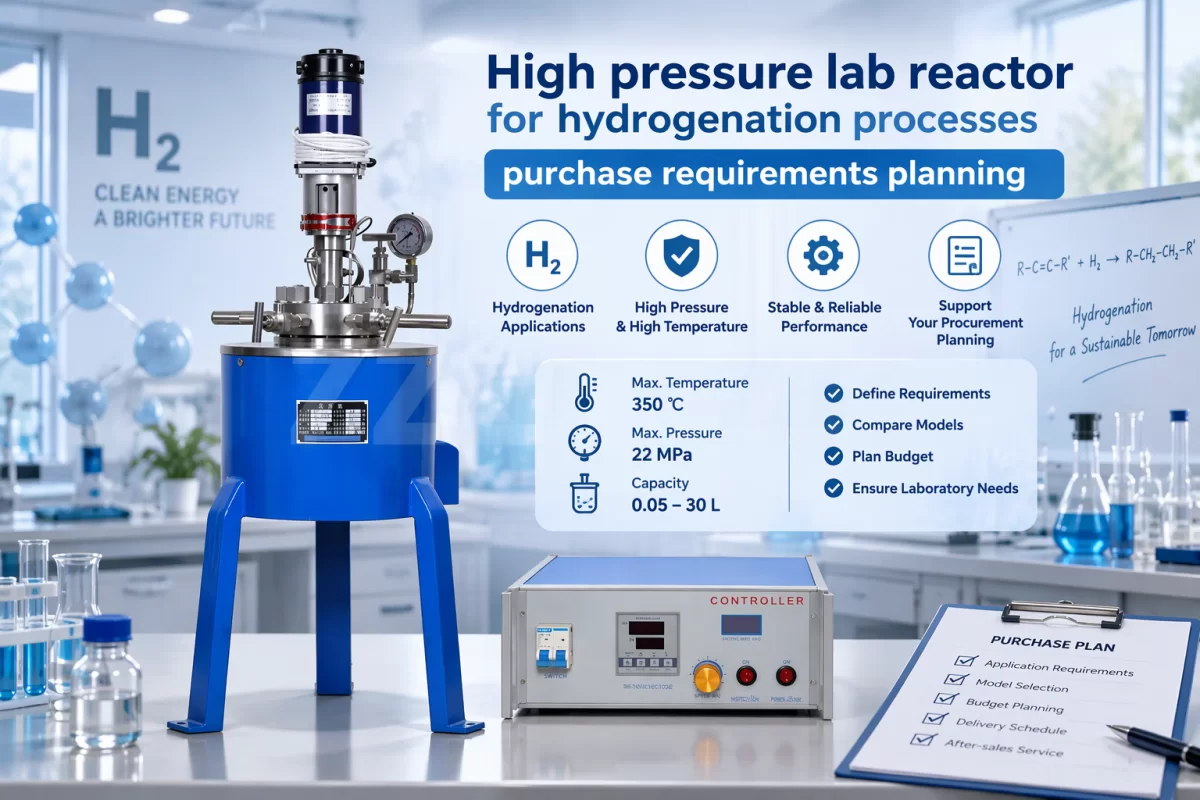
Planning a high pressure lab reactor for hydrogenation processes purchase starts with a documented process—not the largest capacity or highest pressure in a catalog. A useful purchasing package connects the intended batch, hydrogen supply, temperature profile, mixing duty, and laboratory installation to one specific reactor configuration. This checklist follows that package from the initial requirements statement through technical clarification, quotation, and delivery acceptance.
1. Write the hydrogenation process requirements first
Begin with a process requirements sheet that purchasing staff, researchers, and the supplier can use together. Describe the solvent, reactants, catalyst, expected solids content, and any corrosive constituents. Record the intended operating pressure and temperature, anticipated reaction duration, gas supply arrangement, and sampling method. Identify foreseeable changes during the run, including heat release, gas uptake, viscosity changes, and additional liquid feeds.
When evaluating the High Pressure Lab Reactor, request an offer tied to a named model and an itemized configuration. The product category is a starting point; hydrogen suitability depends on the selected vessel, wetted components, seals, gas connections, instrumentation, and installation conditions.
- Process sheet: materials, catalyst characteristics, target operating conditions, and charging sequence.
- Laboratory sheet: available utilities, ventilation arrangements, installation space, and applicable site safety requirements.
- Configuration sheet: agitation, heating and cooling needs, ports, measurement functions, and control requirements.
2. Separate current batch size from expansion plans
Nominal vessel capacity is not an approved working charge. Record the current batch volume separately from catalyst displacement, liquid additions, thermal expansion, foaming behavior, and the gas space needed by the process. Do not apply one filling percentage to every solvent, catalyst slurry, or reaction.
- Current batch: describe the initial liquid charge and solids loading used in routine experiments.
- Feed changes: document additions and the expected maximum contents during the run.
- Process allowance: address expansion, foam, mixing coverage, gas headspace, and abnormal conditions.
- Future expansion: state the later batch target separately and assess whether another vessel size or system will be needed.
A larger vessel can change impeller immersion, heat transfer, and gas–liquid contact at a small working charge. For additional sizing context, the guide to selecting a stainless steel reactor vessel size is a relevant companion to the purchasing specification.
3. Compare specifications by exact reactor model
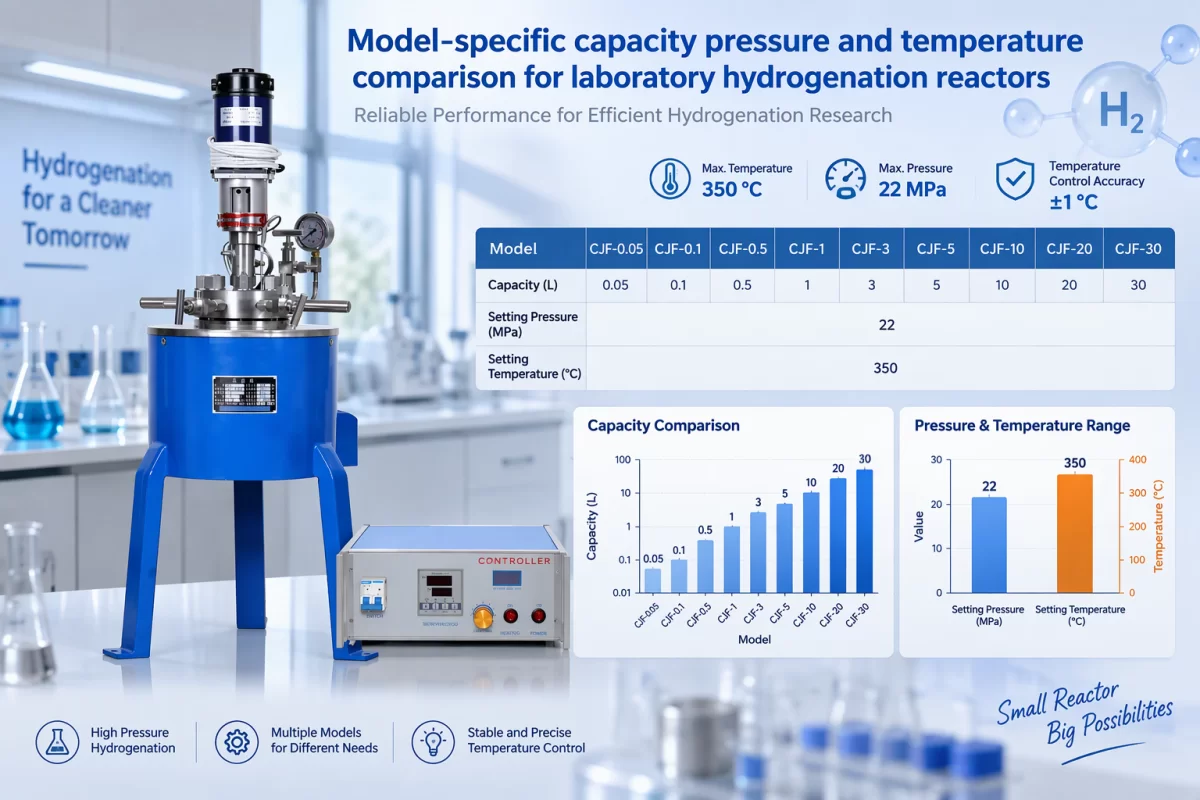
The following FCF examples show why capacity, pressure, temperature, stirring speed, and heating power should remain attached to their individual model rows. These are listed specifications, not proof that the stated pressure and temperature are simultaneously permissible for a particular hydrogenation recipe.
| Model | Capacity (L) | Listed pressure (MPa) | Listed temperature (°C) | Stirring speed (r/min) | Heating power (kW) |
|---|---|---|---|---|---|
| FCF-0.1 | 0.1 | 22 | 350 | 50–1000 | 0.6 |
| FCF-1 | 1 | 22 | 350 | 50–1000 | 1.5 |
| FCF-5 | 5 | 22 | 350 | 50–600 | 4 |
| FCF-30 | 30 | 16 | 350 | 50–600 | 12 |
| FCF-50 | 50 | 10 | 300 | 50–600 | 12 |
| FCF-100 | 100 | 6 | 300 | 50–600 | 14 |
For example, the FCF-50 row lists 50 L, 10 MPa, and 300 °C; it should not inherit the pressure or temperature figures of smaller models. Likewise, stirring speed is not a guarantee of catalyst suspension or hydrogen mass transfer. Impeller geometry, drive capability, fluid properties, and working volume must be considered together.
4. Close technical clarification before placing the order
Keep process requirements and supplier-confirmed equipment capabilities in separate columns in the purchase specification. Request the selected configuration's wetted-material schedule, seal information, vessel drawing, connection schedule, instrument list, and control description. Material selection should address the actual solvent, catalyst, additives, cleaning chemicals, and operating temperature.
For hydrogen service, define the required gas inlet, isolation, purge, vent, pressure measurement, and pressure-relief arrangements. Have the supplier identify the proposed components and their ratings. Any requirements for hazardous-area equipment, conformity documentation, or protective interlocks belong in the inquiry; they should not be assumed from a general reactor description.
The article on high-pressure laboratory reactors for hydrogenation experiments provides related reading while the purchase specification establishes the requirements for the actual order.
5. Align the quotation with the technical package
For budgeting, our company's reference price is US$2,990, using the median of the listed fixed-price entries. This is a company reference price, not a quotation for a particular FCF model or hydrogenation configuration. The actual quotation depends on configuration and the inquiry result.
Ask for an itemized offer covering the vessel and drive, controller, heating equipment, requested cooling arrangement, gas-handling components, instrumentation, accessories, and documentation. Clarify whether installation support, training, spare seals, replacement parts, freight, and commissioning are included or quoted separately.
The purchase order should reference the agreed model, configuration schedule, drawings, documentation deliverables, and acceptance criteria. Record requested modifications explicitly so that the delivered equipment can be checked against the same specification used to approve the purchase.
6. Prepare arrival and acceptance records in advance
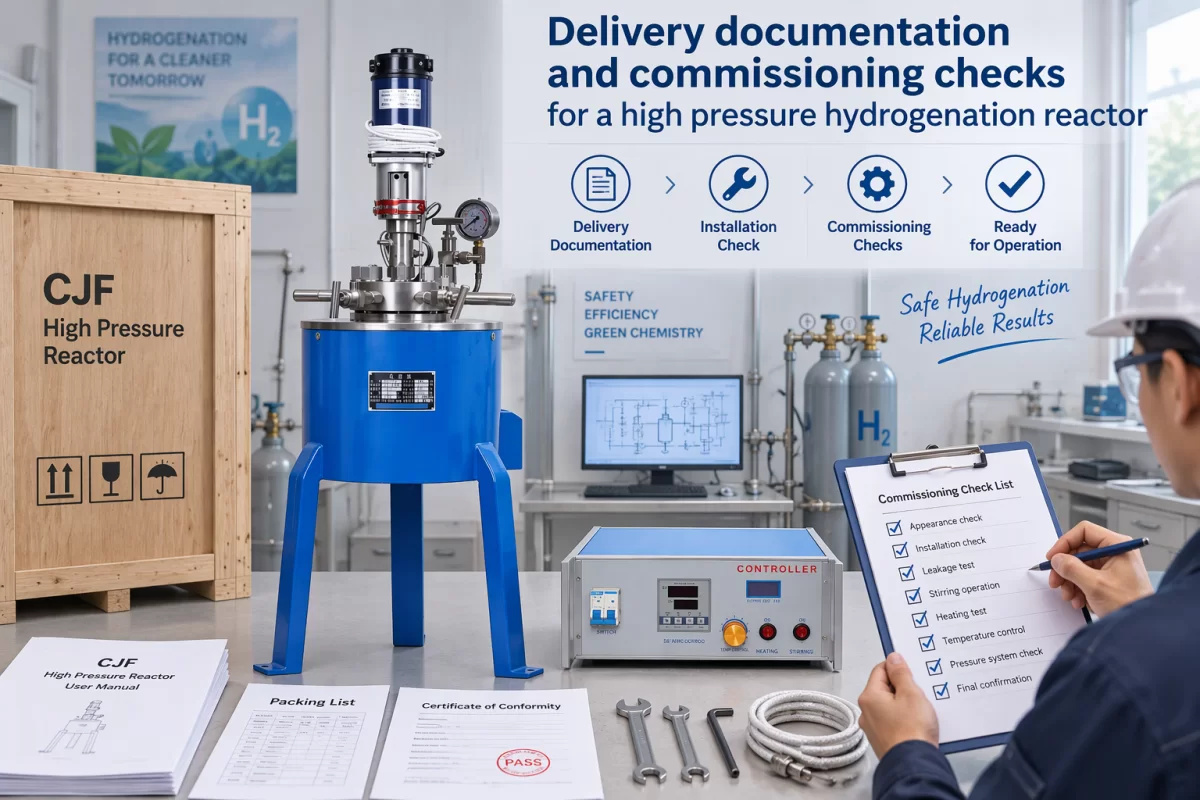
Define acceptance activities before shipment. On arrival, compare the equipment identification and supplied accessories with the purchase order. Inspect for transport damage and check that ports, valves, instruments, and electrical connections match the agreed configuration.
- Document receipt: collect the operating manual, approved drawings, component information, and agreed test or conformity records.
- Installation readiness: verify utilities, ventilation, mounting, access, and connection compatibility.
- Functional checks: use an approved commissioning procedure to assess controls, agitation, measurement, and specified protective functions.
- Acceptance record: document results, outstanding contractual items, operator training, and authorization for intended use.
Make the hydrogenation reactor purchase traceable
A sound laboratory hydrogenation reactor purchase connects a defined process to a specific model, a documented configuration, and agreed acceptance evidence. Keep present batch needs, feed changes, process allowances, and future expansion distinct. Compare complete model specifications, and obtain the relevant operating envelope and hydrogen-service details before committing to an order.
Submit the materials and catalyst information, initial and maximum batch contents, target pressure and temperature, addition sequence, laboratory utilities, and required mixing, sealing, measurement, and gas-handling configuration. These details provide the basis for further application review and a configuration-specific quotation.