
Laboratory equipment · R&D selection guide
Choosing a High Pressure Chemical Reactor for an R&D Laboratory
Selecting a high pressure chemical reactor for research and development labs requires more than matching a vessel to one reaction. Shared laboratory equipment must accommodate changing batch sizes, different chemical systems, additional connections, and records that make experiments comparable across projects.
Start with a multi-project research brief
A reactor dedicated to a single hydrogenation procedure can be specified around a relatively narrow set of operating conditions. An R&D laboratory has a different purchasing problem: the next project may change the solvent, catalyst, viscosity, feed sequence, or sampling method. Flexibility therefore needs to be defined as a set of practical requirements, not assumed from a high pressure rating.
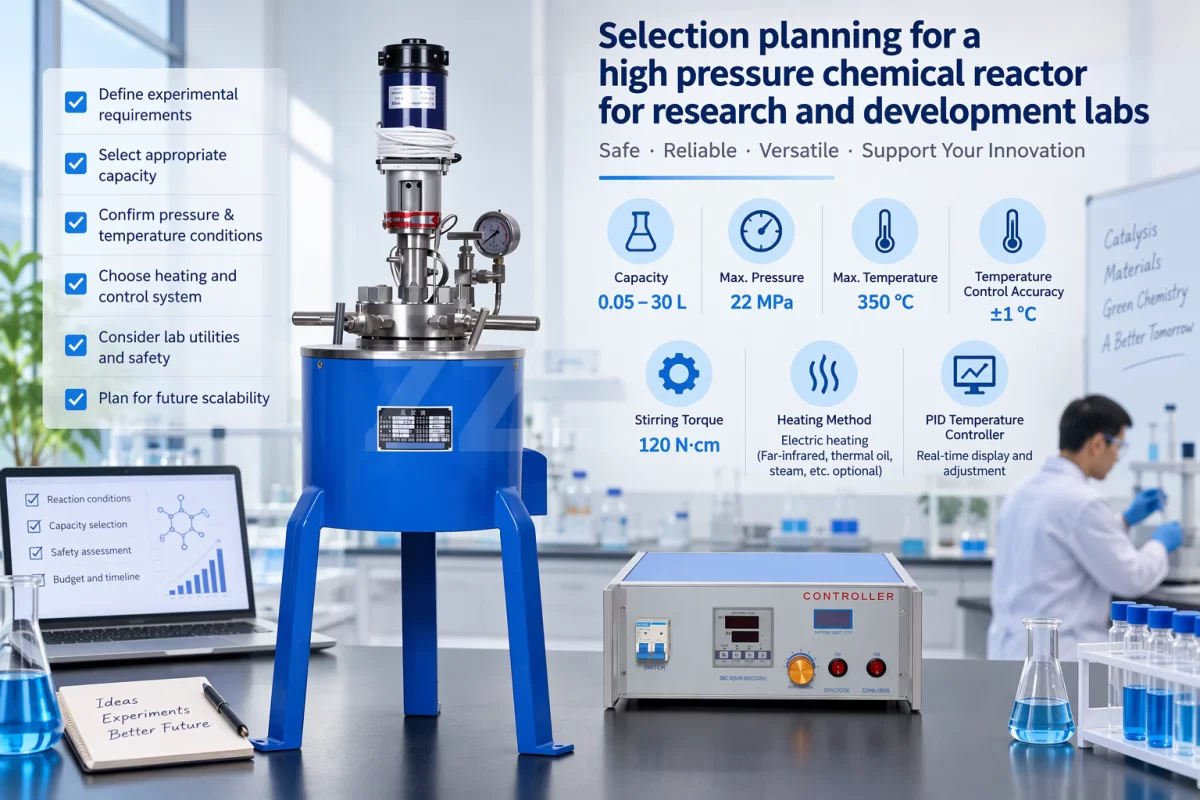
When evaluating the High Pressure Lab Reactor, begin with the experiments the laboratory expects to perform. Separate essential capabilities for current work from desirable options for later projects. Then compare the proposed model, wetted materials, pressure–temperature envelope, stirring arrangement, seals, measurement devices, and connection layout against that brief.
A useful project matrix records each reaction family, its material hazards, intended batch volume, target temperature and pressure, mixing needs, and required measurements. This makes it easier to identify genuinely shared requirements without buying an oversized vessel simply because it appears more versatile.
Does a higher pressure specification automatically make a reactor more suitable for shared R&D work?
My recommendation is to assess suitability as a complete configuration. A higher listed pressure does not establish chemical compatibility, adequate mixing, accessible sampling, or useful experiment records. Those requirements need their own evaluation.
Separate batch volume, additions, process margin, and future growth
Current working batch
Define the starting charge using the actual liquid, solid, and gas phases involved. Nominal vessel capacity is not the same as an approved working charge. The appropriate charge depends on the process, including thermal expansion, foaming, gas space, agitation, and reaction behavior. A universal filling percentage should not be applied to every material.
Changes during addition
Identify the largest expected liquid volume during the experiment, not just the initial charge. Semi-batch feeds, catalyst slurries, washing additions, and sampling losses can change the vessel contents. Gas charging also changes the pressure history and should be assessed separately from liquid volume.
Process margin
Describe the space and operating margin needed for the particular reaction. Potential gas evolution, solvent vapor pressure, an exotherm, or foam formation can affect the specification. These are process requirements to be evaluated; they are not capabilities established by the vessel’s nominal capacity.
Future expansion
Keep future batch growth separate from present requirements. A larger vessel may serve later projects, but current small charges still need adequate impeller immersion, representative temperature measurement, and practical sample withdrawal. The related guide to selecting stainless steel reactor vessel size offers a useful next step when defining the capacity brief.
Compare model-specific pressure reactor specifications
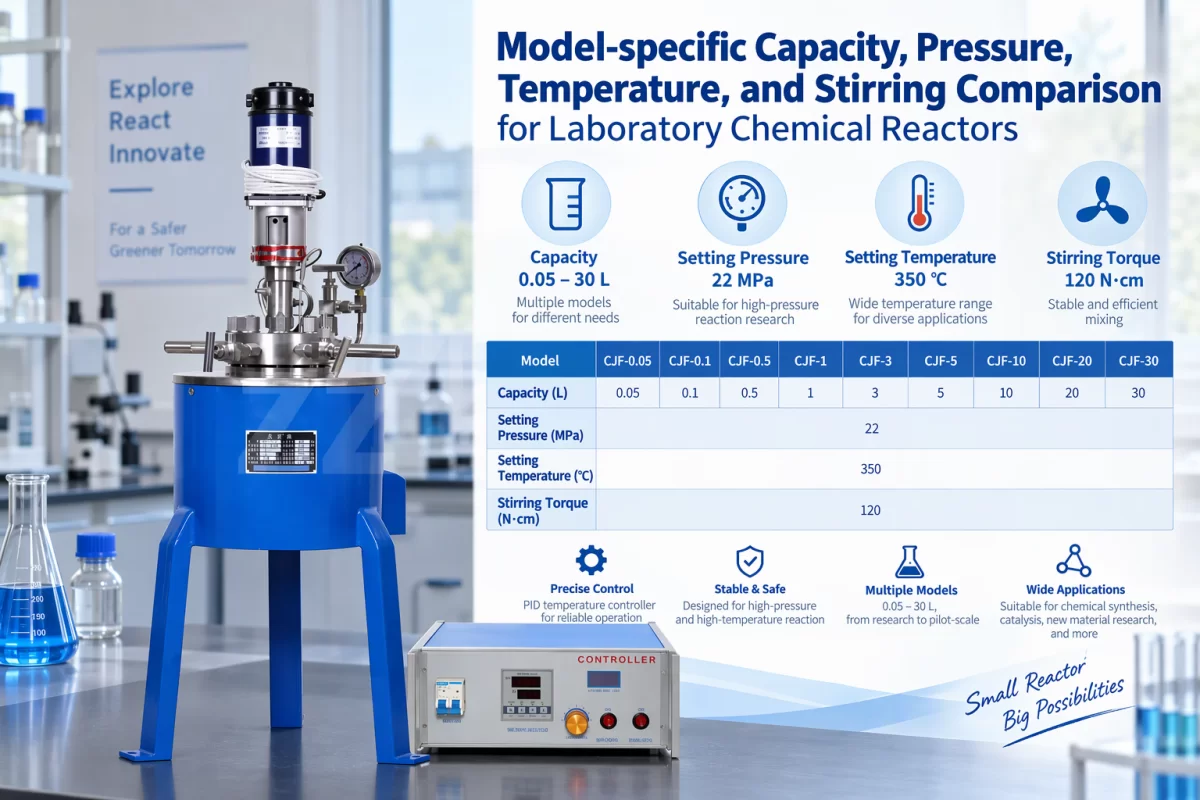
The FCF model specifications below show why capacity, pressure, temperature, stirring speed, and heating power should be compared together. The larger models do not simply inherit the specifications of the smaller vessels.
| Model | Capacity (L) | Pressure (MPa) | Temperature (°C) | Stirring speed (r/min) | Heating power (kW) |
|---|---|---|---|---|---|
| FCF-0.1 | 0.1 | 22 | 350 | 50–1000 | 0.6 |
| FCF-1 | 1 | 22 | 350 | 50–1000 | 1.5 |
| FCF-5 | 5 | 22 | 350 | 50–600 | 4 |
| FCF-20 | 20 | 22 | 350 | 50–600 | 10 |
| FCF-30 | 30 | 16 | 350 | 50–600 | 12 |
| FCF-50 | 50 | 10 | 300 | 50–600 | 12 |
| FCF-100 | 100 | 6 | 300 | 50–600 | 14 |
These fields describe the listed models; they are not a pressure–temperature operating curve or a process performance guarantee. Procurement should establish the allowable simultaneous operating conditions for the specified vessel, materials, seals, and accessories.
For example, FCF-1 and FCF-50 differ in capacity, listed pressure, listed temperature, stirring range, and heating power. Selecting FCF-50 for its volume does not justify applying FCF-1’s pressure specification to it. Likewise, electrical heating power alone does not predict heat-up time or cooling performance for a particular charge.
Can a listed stirring-speed range establish mixing performance for every formulation?
I would treat speed as one selection input, not proof of mixing performance. Impeller geometry, available torque, liquid depth, viscosity, and solids loading also matter. A demanding slurry or viscous formulation needs an application-specific assessment.
Plan materials, seals, and interfaces for changing chemistry
Material selection should cover the complete wetted assembly: vessel, lid, stirrer, valves, dip tubes, sensors, and seals. The TGYF-C specifications list stainless steel 304 and 316 as material options and mechanical stirring with modular electrical heating. These are TGYF-C features, not automatic specifications for other reactor families.
A material name alone does not establish suitability for all acids, solvents, catalysts, or cleaning agents. Give the supplier the chemical composition, concentration, exposure temperature, and cleaning procedure. The stainless steel chemical reactor technical guide is relevant background when preparing this part of the purchase brief.
For cross-project use, describe interfaces by function rather than asking only for “extra ports.” Potential requirements include:
- Feed connections: liquid addition or gas supply arrangements suited to the intended pressure and dosing sequence.
- Sampling: a representative withdrawal method, with suitable isolation and containment for the materials involved.
- Measurement: sensor locations that remain useful at the intended working volumes.
- Future connections: space and mechanical compatibility for additional instruments, subject to the vessel’s approved configuration.
- Pressure protection: a relief arrangement and discharge route selected for the process and laboratory installation.
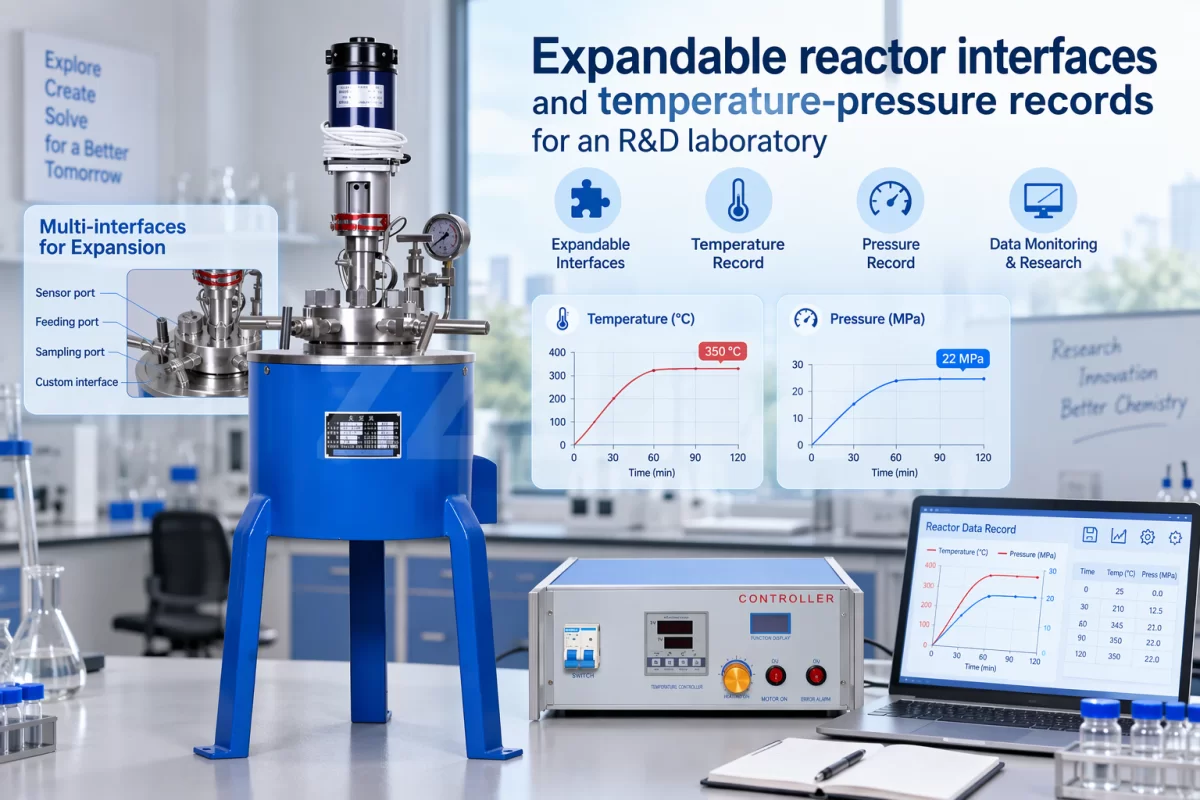
Request a connection drawing and a configuration-specific quotation. Port quantity, dimensions, seal construction, and accessory ratings should be established for the proposed assembly before purchase; they should not be inferred from the product name.
Make experiment records part of the equipment brief
Research results are easier to compare when records distinguish setpoints from measured values. Plan to capture actual temperature and pressure over time, stirring settings, feed events, sampling times, and operator interventions. Also retain the vessel identification, configuration, material details, and relevant calibration records.
A display or controller does not by itself establish automatic data logging. If electronic records are required, specify the needed channels, recording interval, timestamps, export format, and connection to the laboratory’s existing systems. Ask for a demonstration of the proposed recording workflow rather than assuming software connectivity is included.
What should a laboratory request before accepting the reactor configuration?
I recommend a model-specific specification, wetted-material and seal details, a connection drawing, the allowable pressure–temperature envelope, and an explanation of the measurement and recording functions. Acceptance criteria should reflect the intended research workflow, not just whether the heater and stirrer switch on.
Budget for the configuration, not just the vessel
Our fixed-price listings provide a company reference price of US$2,856 for preliminary budgeting. This is a reference across those fixed-price listings, not a quotation for every model or for the complete configuration discussed here. The actual quotation depends on the selected configuration and inquiry result.
For a meaningful purchasing comparison, request an itemized scope covering the vessel, stirring assembly, heating equipment, instrumentation, feed and sampling accessories, pressure protection, and any required data-recording provisions. Identify installation requirements, commissioning scope, and spare seals separately so that the purchasing team can compare like-for-like proposals.
Choose an R&D reactor around verified project fit
The right high pressure chemical reactor for research and development labs is the configuration that supports current experiments while leaving a practical path for future work. Keep batch size, addition changes, process margin, and expansion needs distinct. Compare complete model specifications, then assess materials, mixing, seals, interfaces, and records against the actual process.
Prepare a configuration inquiry: submit the materials and concentrations, initial and final working batch volumes, target operating pressure and temperature, feed sequence, viscosity or solids information, sampling needs, desired interfaces, and recording requirements. Include anticipated future projects so the supplier can evaluate a suitable model and provide a configuration-specific proposal and quotation.